

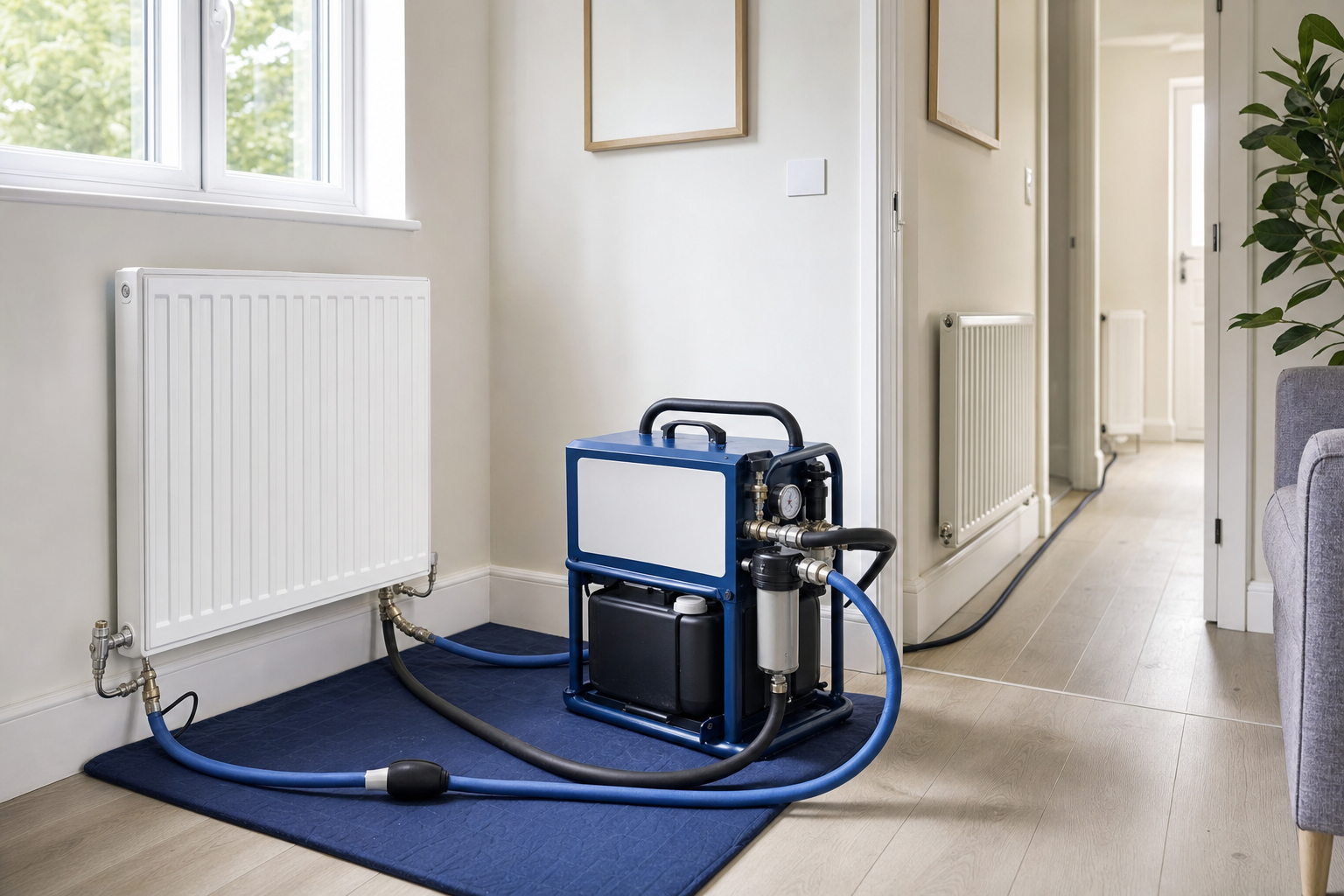
What a power flush is trying to fix
Cold spots and dirty water
We assess the signs of contamination before recommending flushing, not after the quote.
Better flow around the system
Removing sludge and debris can help radiators heat more evenly and warm up faster.
Time and price explained
System size, access and blockage level all shape the final job duration and cost.
Clear the sludge that stops heat moving properly
If radiators are cold at the bottom, the boiler sounds noisy, rooms take ages to warm up or the system water looks dirty, the problem may be contamination in the heating circuit rather than the boiler itself. A power flush uses high-speed water and cleaning chemicals to move through the pipework and radiators, lifting out sludge, rust and debris that have built up over time. With Lewken Limited, we assess the condition of the system first so the work is driven by what the heating is doing, not by a routine upsell. In Ashford, that can make a noticeable difference to circulation and to how evenly radiators perform, especially where contamination has been quietly dragging the whole system down.
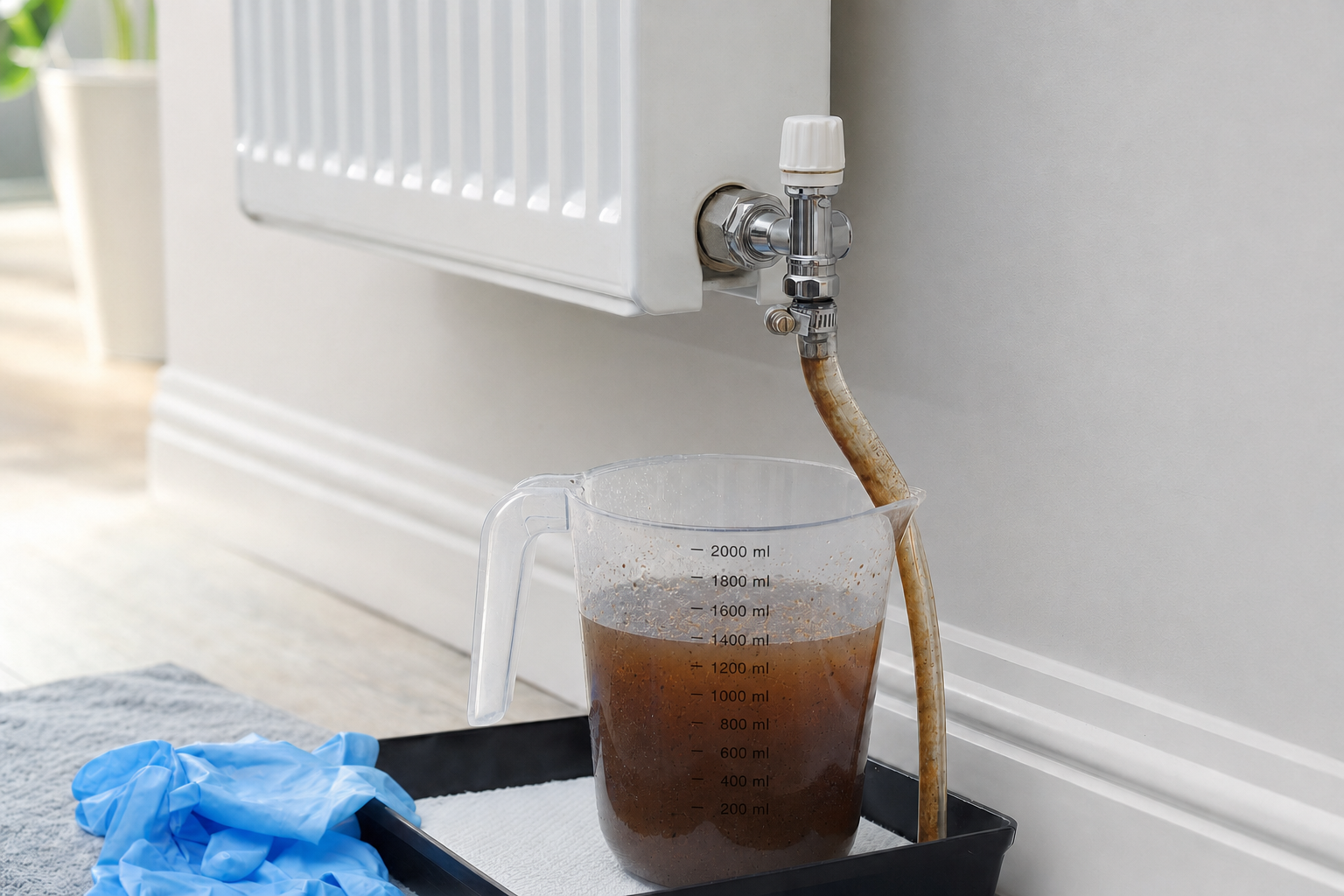
Useful when the system is showing the signs
A power flush is often good winter preparation and is commonly recommended at roughly five-year intervals, but the real guide is the condition of the heating system in front of us. When you book Lewken Limited, we look at cold spots, noise, slow warm-up times and previous contamination concerns before recommending the work. Most jobs take 4 to 6 hours, with a typical price range of £300 to £500, although system size, access restrictions and the degree of blockage all affect both time and cost. The point is not to chase a chemical clean for its own sake. It is to reduce the strain caused by contamination and help heat travel around the system more freely again.
Frequently asked questions
How do we know if the system needs a power flush?
Common signs include radiator cold spots, noisy operation, slow warming, dirty system water and reduced heating performance. We assess the condition of the system before recommending a flush, because the need should be based on what the heating is doing, not a generic timetable.
How long does a power flush usually take?
Most power flush jobs take around 4 to 6 hours. Larger systems, awkward access or heavier contamination can increase the time needed. We explain the likely duration once we understand the size and condition of the system and how severe the blockage looks.
How much does a power flush cost?
The typical price range is £300 to £500, but the final cost depends on system size, access restrictions and the degree of blockage or contamination. We set that out clearly, so you know whether the job is a routine clean or a more involved flush on a struggling system.